Bending transforms a flat, laser-cut blank into a finished three-dimensional component. On a CNC press brake, the process is highly repeatable, but achieving accurate results depends on understanding how material behaves as it is formed. This article introduces the essential concepts and the design practices that lead to consistent, cost-effective parts.
How press-brake bending works
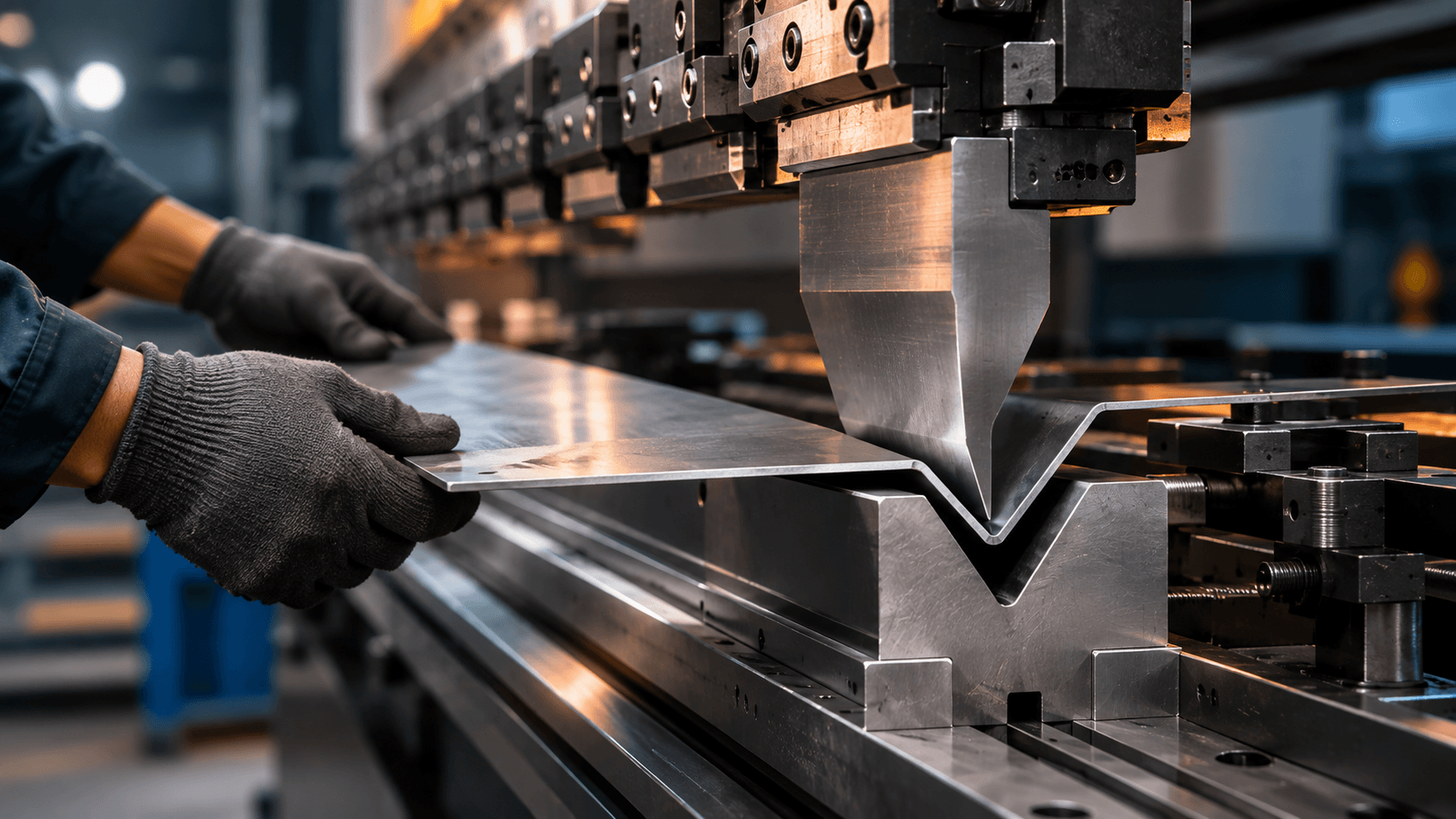
A press brake forms sheet metal by pressing a punch into the material over a V-die. The angle and radius of the resulting bend are governed by the tooling, the die opening and the force applied. Because the process is programmable, once a setup is proven it can be reproduced reliably across a production run.
Bend allowance and the K-factor
When metal is bent, the outer surface stretches and the inner surface compresses. Between them lies a neutral axis whose length does not change. The position of this neutral axis, expressed as the K-factor, is used to calculate the bend allowance — the amount of material consumed by the bend. Accurate flat-pattern development relies on these values, which is why a fabricator applies them when converting a 3D model into a cutting profile.
In short: the flat blank is not simply the sum of the finished flange lengths. Bend allowance accounts for the material that flows through each bend.
Design guidance for reliable bends
A few well-established practices make parts easier to form and improve dimensional consistency:
- Maintain a consistent bend radius. Using one internal radius across a part reduces tooling changes and improves repeatability.
- Respect minimum flange lengths. A flange that is too short cannot be gripped correctly over the die and may deform.
- Keep holes and cut-outs clear of the bend line. Features placed too close to a bend can distort as the metal forms.
- Allow for bend relief. Small relief cuts at the ends of a bend prevent tearing and unwanted deformation.
- Account for grain direction where tight radii are required, particularly on aluminium.
Why accuracy compounds
On a part with multiple bends, small deviations accumulate. A minor angular error on an early bend can shift the position of a later feature significantly. This is why proven tooling, correct bend-allowance calculation and appropriate jigs are essential for parts that must assemble precisely.
Our bending capability
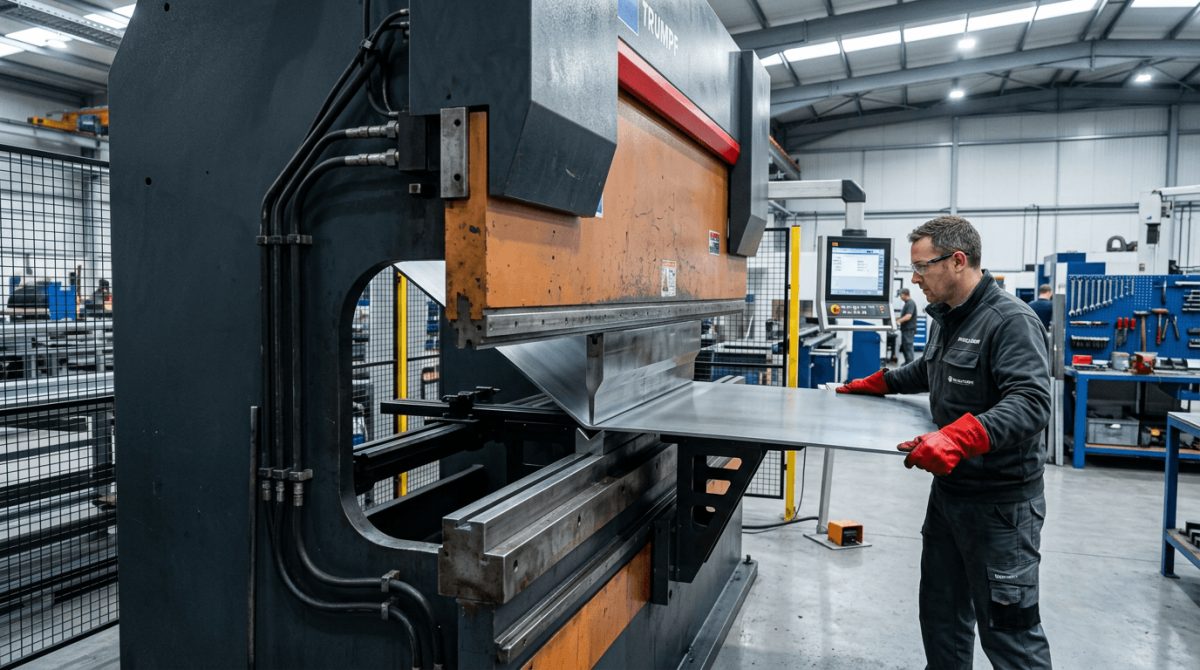
Fabronix Laser Tech operates a Griffon 260-43 CNC press brake, offering 260 tonnes of force across a 4.3 m working length. This allows us to form mild steel up to 10 mm and stainless steel up to 6 mm, depending on tooling and grade. Because cutting and bending are carried out under one roof, flat patterns are developed with the forming process in mind, which improves accuracy and shortens lead times.
If you have a folded component in development, our team can review the design for manufacturability and advise on radii, flange lengths and tolerances. Send a DXF, DWG or STEP file through our enquiry form to begin.
Have a drawing you want reviewed?
Send it over and we will review it for manufacturability and respond with a quotation.
Get a Quote